How to optimize patient care with advanced medical equipment begins with a practical question: what clinical problem should the technology solve? A monitor, imaging system, or infusion pump can support better decisions, but only when it fits the care team’s workflow. Staff need clear training, reliable maintenance, and time to practice using the equipment. Even small details matter. A calibrated sensor. A legible screen. A charged backup battery.
Surgeon and writer Dr. Atul Gawande wrote, “Better is possible. It does not take genius. It takes diligence. It takes moral clarity. It takes ingenuity. And above all, it takes a willingness to try.” His words are not a technical prescription, but they offer a useful principle for healthcare teams evaluating new tools. Test equipment in realistic clinical settings. Check whether alerts are understood, records transfer accurately, and patients can use the devices comfortably.
Measure outcomes that matter, such as response times, equipment-related errors, and patient experience. Review results with clinicians, technicians, and patients, then adjust training or workflows when problems appear. Technology can improve care, but it can also add complexity. That deserves honest attention. No device works perfectly in every setting, and adoption alone does not prove better outcomes. Thoughtful selection, ongoing review, and accountable clinical oversight help turn advanced equipment into dependable support for patients.
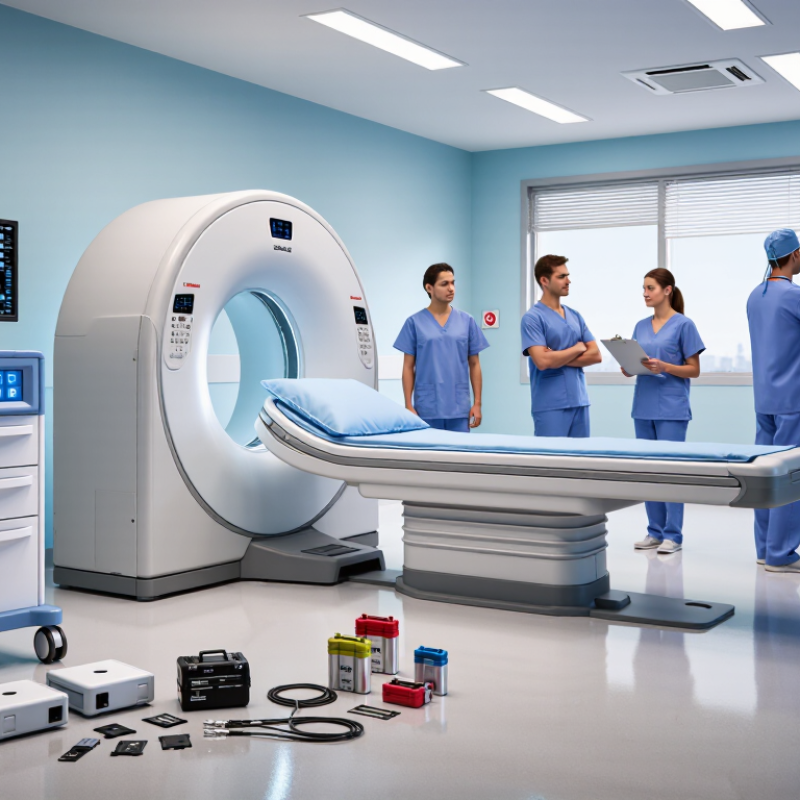
Advanced medical equipment helps care teams observe patients more clearly and act with better information. A bedside monitor can display heart rate, oxygen levels, and blood pressure as they change. Imaging systems may reveal details that a physical exam cannot show. These tools do not make decisions by themselves. Clinicians must interpret readings alongside symptoms, history, and the patient’s own account. One number can mislead.
Equipment matters most when it fits naturally into care. Staff need practical training, clear setup steps, and time to check sensors before use. A loose oxygen sensor or poorly fitted blood-pressure cuff may produce unreliable readings. Alarms should be configured thoughtfully, so important changes are noticed without creating constant noise. Explain what a device is measuring; a calm explanation can reduce worry. Clean surfaces between uses and follow the device’s maintenance schedule. Small details count.
Tips: Keep a quick pre-use checklist. Confirm settings, inspect cables, and check the patient’s comfort. Record unusual readings, then verify them when appropriate. Ask whether the equipment helps the patient feel safer—or simply adds stress. That question deserves attention.
| Equipment | Key data or measurement | Role in patient care | Clinical reference or interpretation | Safe-use consideration |
|---|---|---|---|---|
| Multiparameter patient monitor | Heart rate (beats/min), blood pressure (mmHg), respiratory rate (breaths/min), and oxygen saturation (SpO₂, %) | Supports ongoing assessment and can alert staff to changes that may require clinical review. | A resting heart rate of 60–100 beats/min is a commonly cited adult reference range; readings must be interpreted in the context of the patient and care setting. | Confirm unexpected readings, use appropriately sized sensors and cuffs, and set alarm limits for the individual patient. |
| Pulse oximeter | Peripheral oxygen saturation (SpO₂, %) | Provides a non-invasive estimate of blood oxygen saturation to support oxygen-therapy monitoring. | For many acutely ill adults, a prescribed target may be 94–98%; for patients at risk of hypercapnic respiratory failure, a target of 88–92% may be used pending blood-gas assessment. | Targets are patient-specific. Poor circulation, movement, nail products, and other factors can affect readings; assess the patient as well as the displayed value. |
| Mechanical ventilator | Tidal volume (mL), respiratory rate, airway pressures (cmH₂O), and inspired oxygen concentration (FiO₂) | Delivers respiratory support and provides measurements that help clinicians assess ventilation and oxygenation. | In adult acute respiratory distress syndrome (ARDS), lung-protective protocols commonly use tidal volumes around 6 mL/kg predicted body weight, adjusted within a 4–8 mL/kg range; plateau pressure is generally kept at or below 30 cmH₂O. | Settings require clinician oversight and adjustment to the patient’s condition. Check alarms, circuit connections, and the patient’s response. |
| Smart infusion pump | Infusion rate (mL/hour), programmed dose, and volume infused | Controls delivery of fluids and prescribed medicines, with dose limits available on systems configured with a drug library. | There is no single appropriate infusion rate for all patients; the prescribed dose and rate depend on the medication, patient, and clinical indication. | Verify the medication, concentration, patient, route, and pump settings against the prescription. Do not treat software limits as a substitute for independent clinical checks. |
| Electrocardiograph (ECG) | Electrical waveform, heart rate, and rhythm | Records cardiac electrical activity to help clinicians identify rhythm abnormalities and assess symptoms. | ECG findings are interpreted alongside symptoms, medical history, and, when indicated, other tests; a single tracing does not establish every diagnosis. | Ensure correct electrode placement and good skin contact. Motion, electrical interference, or incorrect placement can distort the tracing. |
| Diagnostic ultrasound | Real-time images and measurements of selected organs, tissues, or blood flow | Supports diagnostic assessment and image-guided procedures without using ionizing radiation. | Measurements and findings depend on the examination, image quality, and clinical question; results should be interpreted by a qualified practitioner. | Use the appropriate examination protocol and trained operators. Apply the lowest output and shortest scan time needed to obtain diagnostic information. |
| Magnetic resonance imaging (MRI) scanner | Magnetic-resonance images of soft tissues and other anatomical structures | Provides detailed diagnostic images that can help guide assessment and treatment planning. | MRI uses a strong magnetic field and radiofrequency energy rather than ionizing radiation; the appropriate scan depends on the clinical question. | Screen patients, staff, and equipment for MRI safety before entering the scan room, including implants and other ferromagnetic objects. |
Note: Clinical ranges and settings shown are examples for context, not instructions for an individual patient. Follow current local protocols, device instructions, and the treating clinician’s assessment.
A bedside monitor can display heart rate, oxygen levels, and blood pressure as they change. One number can mislead.
No. Clinicians interpret readings with symptoms, medical history, and the patient’s own account.
Check sensors, cables, and settings before use. A loose oxygen sensor may give unreliable results.
Start with a clear care need, such as delayed vital-sign checks or repeated manual data entry. Include staff who will use and maintain the equipment.
Compatible equipment can fit more smoothly into digital workflows. Test setup and handoffs before rollout.
Track measures like device availability, repeat examinations, alarm frequency, and procedure time. Compare them with a baseline, but consider patient complexity.
Patients may notice discomfort or confusing instructions that routine logs miss. Ask whether the device feels reassuring or adds stress.
Follow local policy to remove it from service and report the issue promptly. Complete required checks after repairs.
Not necessarily. Numbers need context, and that part is easy to overlook.
Advanced medical equipment can strengthen patient care by supporting more accurate assessments, timely interventions, and consistent monitoring. To use these tools effectively, healthcare organizations should begin by identifying clinical needs, patient populations, and care priorities. Selecting appropriate technologies requires considering their capabilities, usability, compatibility with existing systems, and the practical demands of clinical settings. The goal is not simply to add more equipment, but to choose tools that address real challenges and contribute to better, safer care.
Successful implementation also depends on thoughtful workflow integration and thorough staff training. Teams need clear procedures for using equipment, communicating findings, and responding to alerts, while keeping patient comfort and safety at the center of care. Regularly evaluating clinical outcomes, user feedback, and operational efficiency can show whether the technology is delivering meaningful benefits. Ongoing maintenance, inspections, and timely troubleshooting help preserve performance and reliability. Together, these steps offer a practical approach to how to optimize patient care with advanced medical equipment.

 Ryu Medical