In the rapidly evolving medical device industry, how to select reliable medical device suppliers is crucial for healthcare success. According to a recent report by Grand View Research, the global medical devices market is expected to reach over $600 billion by 2024. This growth highlights the importance of partnering with suppliers who prioritize quality and compliance.
Reliability in supplier selection is not just about product availability. It involves ensuring that the suppliers adhere to stringent regulatory standards, such as ISO 13485 and FDA requirements. The Medical Device Innovation Consortium (MDIC) states that up to 70% of medical device recalls are linked to supplier quality issues. Therefore, it becomes essential to vet potential partners thoroughly.
Many healthcare providers struggle with the supplier evaluation process. They often prioritize price over quality, leading to long-term challenges. A report from Deloitte emphasizes that 47% of companies fail to assess supplier risk adequately. This oversight can result in significant operational disruptions. Finding the right suppliers requires a balanced approach, considering factors like certifications, track record, and ability to innovate.
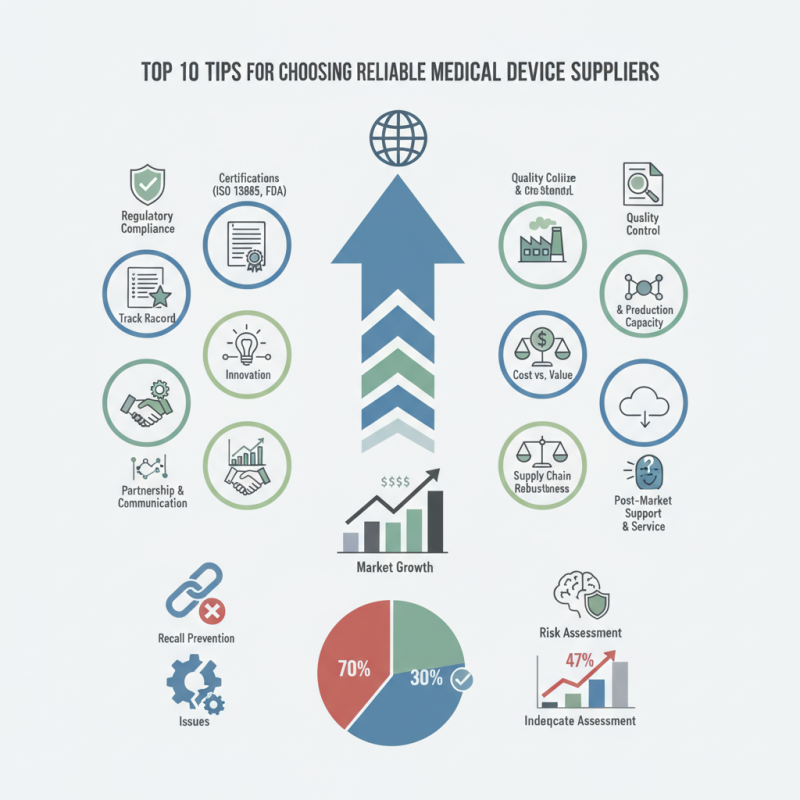
When choosing a medical device supplier, it's crucial to identify key certifications. Trusted certifications denote credibility and quality. Look for ISO 13485, which focuses on quality management systems. This certification ensures the supplier meets international standards for medical devices.
Another important certification is the FDA 510(k). This indicates that the device is safe and effective for its intended use. Suppliers with this certification have undergone rigorous testing and review processes. Consider also CE marking, which signifies compliance with European safety standards.
While these certifications can assure quality, they are not foolproof. Some suppliers may possess certifications but lack real-world experience. It’s essential to review their track record and client feedback. Engage with them to gauge their responsiveness and willingness to support your needs. This holistic approach ensures that certification aligns with practical capabilities.
| Criteria | Description | Key Certifications |
|---|---|---|
| Reputation | Research supplier's history and customer reviews to assess reliability. | ISO 13485 |
| Quality Management | Ensure they have a solid quality management system in place. | ISO 9001 |
| Regulatory Compliance | Verify compliance with local and international regulations. | CE Marking, FDA Approval |
| Product Range | Assess if they offer a wide range of medical devices to meet needs. | N/A |
| Customer Support | Evaluate their customer service responsiveness and support options. | ISO 10002 |
| Financial Stability | Check their financial health to ensure long-term stability. | N/A |
| Supply Chain Management | Evaluate their supply chain transparency and reliability. | FSC Certification |
| Innovation | Look for suppliers who invest in R&D and new technologies. | N/A |
| Price and Value | Compare pricing and value proposition with competitors. | N/A |
| Ethical Standards | Ensure the supplier adheres to ethical practices and sustainability. | SA8000 |
: Industry standards guide compliance. Compliance ensures products are safe and effective for patients.
Look for detailed documentation of their quality control processes and relevant certifications.
Investigate previous product recalls or quality issues. A strong record indicates reliability.
Ask for references from other healthcare providers. Their feedback is often informative.
Clear communication ensures mutual understanding of expectations, potential issues, and timelines.
Ideally, suppliers should provide 24/7 assistance, especially during emergencies.
Set up a structured system for input. This can enhance your partnership.
Address these gaps quickly. This action is critical to maintaining a strong relationship.
Yes, visiting sites provides valuable insight into their quality management systems.
Evaluate their response to feedback. Openness to change is crucial for improvement.
When considering how to select reliable medical device suppliers, it's crucial to focus on several key aspects. First, identifying essential certifications ensures that the supplier meets industry standards and regulatory requirements, thereby assuring product safety and efficacy. Evaluating the supplier's experience and reputation within the industry provides insight into their reliability and the quality of their offerings.
Furthermore, assessing product quality and regulatory compliance is vital for ensuring that the devices meet the necessary safety standards. Understanding the supply chain's stability and reliability is important to mitigate risks associated with disruptions. Lastly, establishing clear communication and support channels fosters a collaborative relationship, enhancing problem-solving and support when issues arise. By focusing on these factors, organizations can confidently choose suppliers that will support their medical device needs effectively.

 Ryu Medical